In most conversations about anxiety, people talk about racing heartbeats, sweating palms, and fast breathing. That is the “fight or flight” response we all know.
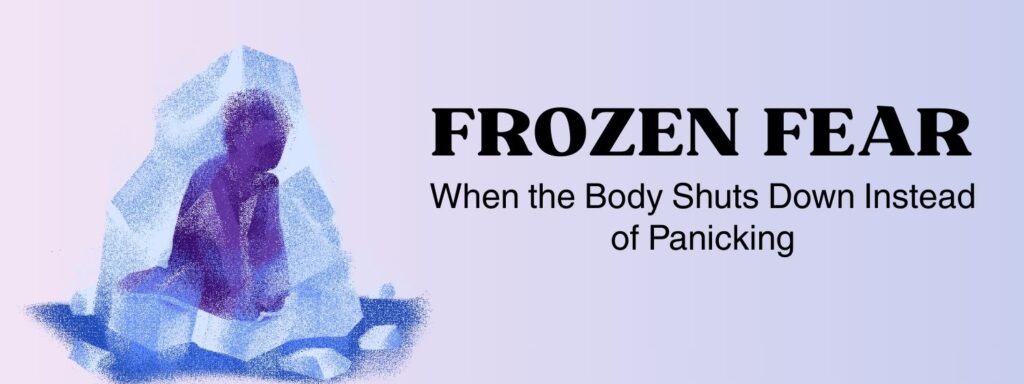
But there is another stress response that many people experience silently. It is called Frozen fear.
Frozen fear is when the body does not panic outwardly. Instead, it shuts down. You may feel numb. You may feel disconnected. You may feel unable to speak or move. From outside, you may look calm. Inside, your nervous system is overwhelmed.
As a holistic healing firm in India, we meet many clients who say,
“I don’t panic. I just go blank.”
“I freeze in difficult conversations.”
“I cannot react even when I want to.”
This blog will help you understand Frozen fear in simple language. We will explore:
- What Frozen fear really is
- Why it happens
- How it affects the body and mind
- Signs and symptoms
- How to heal it naturally
- Holistic tools to regulate the nervous system
- FAQs people are asking online
Let us begin gently.
What Is Frozen Fear?
Frozen fear is a nervous system response where your body chooses immobility instead of fight or flight.
When the brain senses danger, it activates survival mode. Most people know two responses:
- Fight – Confront the threat
- Flight – Escape the threat
But there is a third powerful response:
- Freeze – Shut down, become still, disconnect
This freeze response is ancient. It exists in animals and humans. It is not weakness. It is biology.
When the nervous system believes:
- The danger is too big
- Escape is not possible
- Fighting is not safe
It activates immobilization.
This is Frozen fear.
Frozen Fear vs Panic: What Is the Difference?
Many people assume anxiety always looks loud. That is not true.
Panic Response Looks Like:
- Fast heartbeat
- Sweating
- Restlessness
- Crying
- Shaking
Frozen Fear Looks Like:
- Blank mind
- Stiff body
- Heavy limbs
- Emotional numbness
- Difficulty speaking
- Dissociation
Someone in panic looks distressed.
Someone in Frozen fear may look calm, but inside, their nervous system is overwhelmed.
This is why many people do not realize they are anxious. They think,
“I am just tired.”
“I am lazy.”
“I don’t care.”
But often, it is the body protecting itself.
Why Does Frozen Fear Happen?
Frozen fear is not random. It usually develops due to repeated stress or trauma.
Common Causes
- Childhood emotional neglect
- Strict or controlling environments
- Bullying
- Sudden shocks or accidents
- Chronic stress
- Long-term anxiety
- Emotional abuse
- Medical trauma
When a person repeatedly experiences situations where:
- They cannot speak
- They cannot escape
- They cannot express anger
- They feel powerless
The nervous system learns to freeze.
Over time, freezing becomes automatic.
The Science Behind Frozen Fear
To understand Frozen fear, we need to understand the nervous system.
The nervous system has two main parts:
- Sympathetic nervous system – Activates fight or flight
- Parasympathetic nervous system – Promotes rest and recovery
Within the parasympathetic system, there is a branch that shuts down when overwhelmed. This is sometimes called the “immobilization response.”
When stress is too intense, the body shifts from:
Fight → Flight → Freeze
This is survival wisdom, not weakness.
The body says:
“If I cannot win and I cannot escape, I will conserve energy and shut down.”
Signs You May Be Experiencing Frozen Fear
Many of our clients in India describe similar experiences.
Physical Signs
- Sudden tiredness during stress
- Cold hands and feet
- Heavy body feeling
- Shallow breathing
- Tight throat
- Difficulty making eye contact
Emotional Signs
- Feeling numb
- Feeling disconnected from emotions
- No reaction when something upsetting happens
- Delayed emotional response
Mental Signs
- Brain fog
- Difficulty thinking clearly
- Forgetting what you wanted to say
- Going blank in meetings
Behavioural Signs
- Avoiding confrontation
- Not defending yourself
- Saying “it’s fine” when it’s not
- Staying silent even when hurt
If you relate to many of these, you may be experiencing Frozen fear.
How Frozen Fear Affects Daily Life
Frozen fear does not just appear during trauma. It can show up in:
- Workplace meetings
- Romantic relationships
- Family arguments
- Public speaking
- Social situations
- Medical settings
Many people say:
“I wanted to say something, but I couldn’t.”
“I just smiled and stayed quiet.”
“I felt stuck.”
Over time, this leads to:
- Low self-esteem
- Guilt
- Shame
- Frustration
- Emotional exhaustion
People often blame themselves. But this is not a character flaw. It is nervous system protection.
Is Frozen Fear a Trauma Response?
Yes, in many cases, Frozen fear is linked to trauma.
Trauma is not only big events like accidents. It can also be:
- Repeated criticism
- Emotional invalidation
- Fear-based parenting
- Growing up in unpredictable environments
When the body learns that speaking up leads to punishment or rejection, freezing feels safer.
This is especially common in high-pressure cultures where emotional expression is discouraged.
Frozen Fear and Dissociation
Sometimes Frozen fear includes dissociation.
Dissociation means:
- Feeling detached from your body
- Feeling like you are watching yourself from outside
- Time feels slow or strange
It is the nervous system’s way of protecting you from emotional overload.
If this happens often, gentle professional support is recommended.
Why You Should Not Shame Yourself
One of the most healing steps is understanding this:
Frozen fear is not weakness.
It is intelligence.
Your body once learned that freezing kept you safe.
Instead of asking,
“What is wrong with me?”
Try asking,
“When did I learn this was safer?”
Self-compassion begins healing.
How to Heal Frozen Fear Naturally
Healing Frozen fear requires nervous system regulation.
Not force. Not self-criticism. Not “just be confident.”
Here are holistic methods that help.
1. Grounding the Body
Freezing disconnects you from your body. So healing requires reconnecting.
Simple Grounding Techniques
- Press your feet firmly into the floor
- Hold something cold in your hands
- Name 5 things you see
- Take slow belly breaths
- Move your shoulders gently
These small actions signal safety to the nervous system.
2. Gentle Movement Practices
Since a freeze involves immobility, movement helps release it.
Helpful practices:
- Slow yoga
- Trauma-sensitive stretching
- Walking in nature
- Shaking exercises
- Somatic therapy
The goal is not intense workouts. It is a gentle reconnection.
3. Breathwork for Frozen Fear
When the body freezes, breathing becomes shallow.
Try:
- Inhale for 4 seconds
- Exhale for 6 seconds
- Repeat for 5 minutes
Longer exhalations activate calming pathways in the nervous system.
4. Safe Emotional Expression
Many people with Frozen fear suppress emotions.
Start small:
- Journal your feelings
- Speak out loud when alone
- Practice saying “I feel…”
- Express anger safely through writing
Expression builds nervous system strength.
5. Creating Micro-Moments of Safety
Healing does not require dramatic changes. It requires repeated safety.
Daily safety rituals:
- Morning sunlight
- Warm herbal tea
- Gentle self-touch (hand on heart)
- Calming music
- Spiritual prayer or mantra
In our holistic healing sessions, we often integrate breathwork, grounding, and spiritual practices together. The body heals best when it feels supported, not pushed.
Frozen Fear in Relationships
Many people freeze during:
- Arguments
- Emotional discussions
- Confrontation
- Intimacy
This creates misunderstandings.
A partner may say,
“You don’t care.”
But the truth is:
Your body shut down.
Healing requires:
- Awareness
- Communication
- Slow nervous system work
You can explain to loved ones that freezing is a stress response, not a sign of indifference.
Frozen Fear in the Workplace
In professional settings, Frozen fear may show up as:
- Not speaking in meetings
- Avoiding leadership roles
- Difficulty negotiating salary
- Saying yes to everything
Over time, this affects growth.
Practical steps:
- Prepare written notes before meetings
- Practice speaking in low-pressure environments
- Take one small speaking risk per week
- Work with a coach or therapist
Gradual exposure builds confidence.
When to Seek Professional Help
You should seek support if:
- Freezing happens daily
- You dissociate often
- You cannot function at work or in relationships
- You feel emotionally numb most of the time
Therapies that help:
- Trauma-informed therapy
- Somatic therapy
- EMDR
- Nervous system regulation practices
Healing Frozen fear is possible with the right guidance.
A Holistic View: Mind, Body, and Energy
From a holistic healing perspective, Frozen fear blocks life force energy.
It often affects:
- Throat area (expression)
- Chest (emotions)
- Solar plexus (confidence)
Practices that support energetic balance:
- Meditation
- Reiki
- Pranayama
- Sound healing
- Chakra balancing
When the body feels safe, the mind opens. When the mind feels safe, expression returns.
Healing is gradual. But it is real.
Final Thoughts: You Are Not Broken
If you experience frozen fear, please remember:
Your body is not your enemy.
It learned survival.
Healing begins with awareness, compassion, and gentle nervous system care.
In our holistic healing practice in India, we have seen people move from numbness to confidence. From silence to expression. From shutdown to strength.
You do not need to force yourself to be fearless.
You only need to feel safe.
And safety can be rebuilt, slowly, steadily, and with support.
Frequently Asked Questions (FAQs) About Frozen Fear
1. What is Frozen fear in simple words?
Frozen fear is when your body shuts down instead of panicking during stress. You may feel numb, blank, or unable to react.
2. Is Frozen fear a trauma response?
In many cases, yes. It often develops after repeated stress, emotional neglect, or overwhelming experiences.
3. Why do I freeze during arguments?
Your nervous system may believe confrontation is unsafe. So it protects you by shutting down temporarily.
4. Can Frozen fear be cured?
It can be healed. With nervous system regulation, therapy, grounding, and holistic practices, people learn to respond instead of freeze.
5. Is freezing the same as being weak?
No. Freezing is a survival response. It once helped you cope with stress.
6. How do I stop freezing in social situations?
Start small:
- Practice grounding before events
- Take slow breaths
- Prepare what you want to say
- Seek therapy if needed
Gradual exposure helps.
7. Why do I feel numb instead of anxious?
Numbness is sometimes the body’s way of protecting you from overwhelm. It is part of the freeze response.
8. Can meditation help frozen fear?
Yes, if practiced gently. Avoid intense meditation initially. Focus on grounding and body awareness.
9. Is Frozen fear related to anxiety disorders?
It can be connected. Some people with anxiety experience freezing instead of panic.
10. How long does it take to heal Frozen fear?
Healing time varies. With consistent support and practice, many people see improvement within months.